












Vintage Erie Railroad Porcelain Sign | Authentic Antique Gas Pump Sign
$122.07
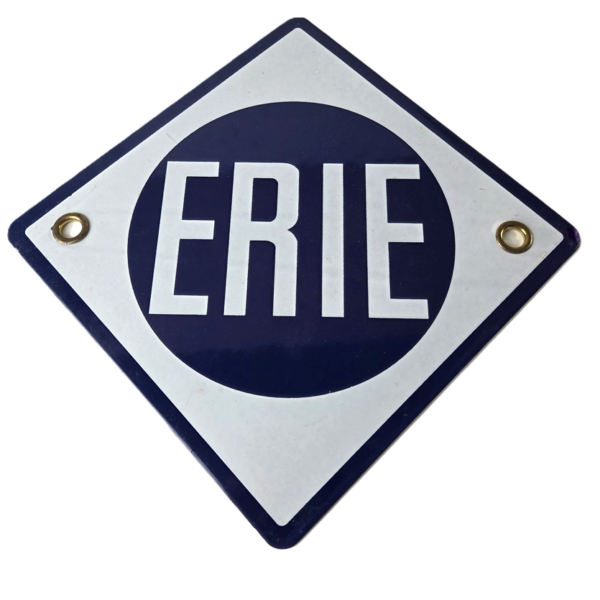
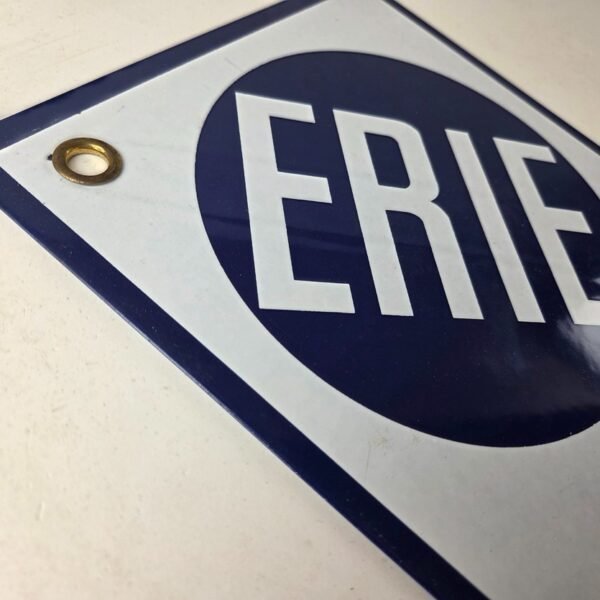
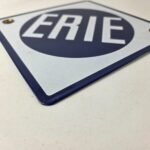
Vintage Erie Railroad porcelain enamel sign — a genuine kiln-fired advertising piece from one of America’s most storied northeastern railroads, chartered in 1832 and the original iron artery connecting New York City to the Great Lakes at Dunkirk. Produced in the classic era of American porcelain sign manufacturing (circa 1930s–1950s), this gas pump plate features the bold Erie Railroad branding used across service stations and fuel depots throughout New York, New Jersey, and Pennsylvania. Original, unrestored condition with vivid kiln-fired colour on heavy-gauge steel. Authenticated. Ships fully insured.
Vintage Erie Railroad Sign — Authentic Porcelain Enamel Gas Pump Plate, Northeastern USA
What Is This Sign?
This is an authentic vintage Erie Railroad porcelain sign — a genuine kiln-fired enamel advertising piece produced during the classic era of American porcelain sign manufacturing, circa 1930s–1950s. It is a gas pump plate format: a rectangular porcelain sign designed to be mounted on or adjacent to fuel dispensing equipment at railroad-affiliated service depots, fuel stations, and maintenance facilities across the northeastern United States. The Erie Railroad operated one of America’s most historically significant rail networks — chartered in 1832, connecting New York City’s Jersey City terminal to Lake Erie at Dunkirk, New York, and eventually extending west to Chicago. This sign is a physical artifact from that era.
Key fact: Every colour visible on this sign is kiln-fired glass — not paint. Fused to heavy-gauge steel at 750–900°F, the enamel surface is the reason this piece has survived 70–90 years looking the way it does today.
The Erie Railroad: Historical Context
The Erie Railroad (reporting mark: ERIE) holds a distinguished place in American transportation history. Chartered on April 24, 1832, by New York Governor Enos T. Throop, it was conceived as a bold infrastructure project to connect the bustling port of New York City with the Great Lakes — bypassing the Erie Canal and opening economic development in New York’s historically underserved Southern Tier.
When the full route opened on May 19, 1851, President Millard Fillmore and members of his cabinet made a special ceremonial excursion run to mark the occasion. At its completion, the Erie was the longest railroad under single ownership in the world — an engineering achievement that put it on the cover of every major newspaper of the day.
The railroad’s mainline traversed some of the most challenging terrain in the eastern United States — crossing the Kittatinny Mountains at 870 feet elevation, winding along the Delaware River through Pennsylvania’s northeast corner, and threading the valleys of New York’s Southern Tier through cities including Binghamton, Elmira, and Hornell. The Starrucca Viaduct, completed in 1848 — a 1,040-foot stone arch bridge crossing 18 spans — remains one of the great engineering landmarks of the American railroad era.
After a 1865 merger with the Atlantic and Great Western Railroad, the Erie’s reach extended to Chicago, making it the fourth trunk route between New York and the Midwest alongside the Pennsylvania Railroad, New York Central, and Baltimore & Ohio. The Erie operated named passenger expresses including the Erie Limited, Lake Cities, Pacific Express, and Southern Tier Express — services that defined northeastern travel during the first half of the 20th century.
On October 17, 1960, the Erie merged with its former rival the Delaware, Lackawanna & Western Railroad to form the Erie Lackawanna Railway. Erie Lackawanna became part of Conrail in 1976. Today, most of the surviving Erie mainline is operated by Norfolk Southern Railway as its Southern Tier Line — the original routes still carrying freight across the same terrain the Erie’s steam engines traversed more than a century ago.
Collector context: Erie Railroad signs are among the most historically documented northeastern railroad collectibles. Unlike regional or short-line railroad signs, Erie pieces are supported by an established collector base spanning both general porcelain sign collectors and railroad memorabilia enthusiasts — giving them strong crossover demand.
About This Sign: Physical Description & Condition
This is a gas pump plate format — the rectangular porcelain enamel signs mounted on or adjacent to fuel dispensing equipment at service depots affiliated with, or fuelling, Erie Railroad operations. Gas pump plates were produced in large quantities by major rail and oil companies and used heavily in outdoor conditions, making well-preserved examples significantly less common than their production volume would suggest.
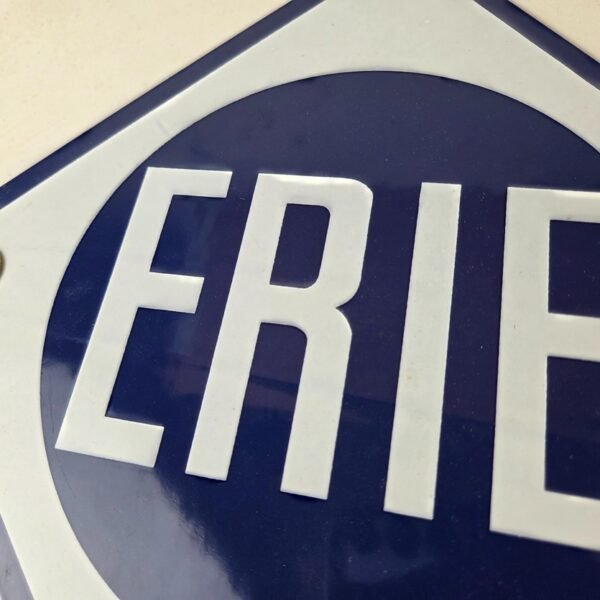
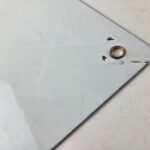
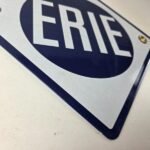
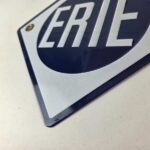
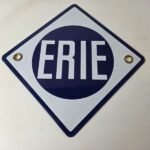
The sign presents Erie Railroad branding in the bold, high-contrast graphic style characteristic of the 1930s–1950s porcelain sign era. The enamel surface retains strong colour depth consistent with kiln-fired glass, not painted reproduction. The heavy-gauge steel substrate and characteristic edge enamel wrap are consistent with period-correct American porcelain sign manufacturing.
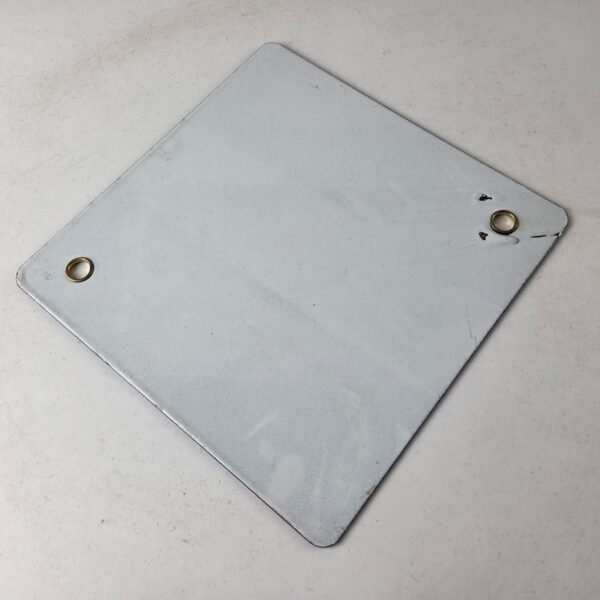
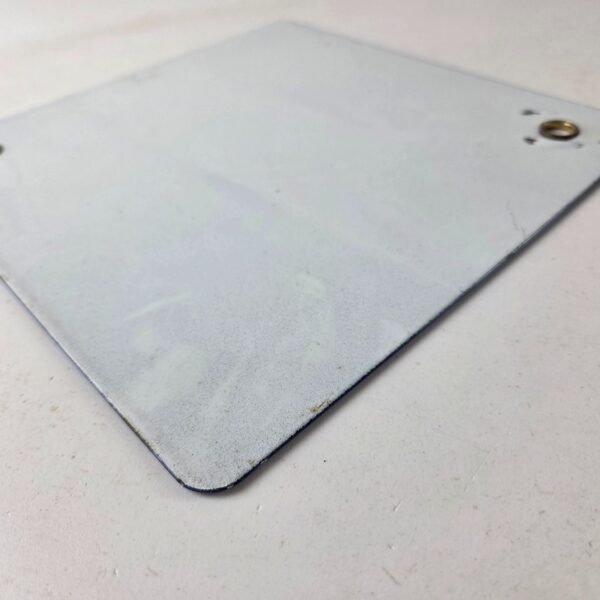
Condition note: This sign is presented in its authentic, original condition. No restoration, touch-up, or enamel infill has been performed. Any surface wear or minor edge chips reflect the natural aging of a piece that served in active outdoor commercial use for decades. Original unrestored condition is the preferred standard for serious collectors.
Product Specifications
| Specification | Detail |
| Product type | Vintage porcelain enamel sign (original, not a reproduction) |
| Railroad | Erie Railroad (reporting mark: ERIE) — Northeastern USA |
| Sign format | Gas pump plate — rectangular advertising panel |
| Era / Date | Circa 1930s–1950s (classic American porcelain sign era) |
| Construction | Kiln-fired vitreous enamel on heavy-gauge steel, 18–22 gauge |
| Surface | Multi-layer glass enamel, fired at 750–900°F |
| Geographic scope | Northeastern United States: New York, New Jersey, Pennsylvania |
| Condition | Original, unrestored — see full condition description above |
| Authentication | Authenticated by Vintage Porcelain Signs Store |
| Shipping | Professionally packed, fully insured for sold value |
| Returns | Returns accepted if sign is materially misrepresented |
Why Erie Railroad Signs Are Collected
The Erie Railroad was one of the four great trunk lines of the American Northeast — operating more than 2,200 route miles across New York, New Jersey, Pennsylvania, Ohio, Indiana, and Illinois at its peak. Its operational territory encompasses some of the most historically significant industrial and commercial regions of 19th and 20th century America.
For collectors, Erie Railroad signs occupy a strong position in the market for several reinforcing reasons:
- Brand recognition:The Erie Railroad name and ERIE reporting mark are well-known among railroad enthusiasts, general Americana collectors, and antique advertising buyers. This broad recognition supports collector demand beyond the specialist railroadiana market.
- Historical depth:A history stretching from 1832 through 1960 means Erie signs span multiple design eras and graphic styles — from early 19th-century letterpress aesthetics through the bold industrial commercial design of the mid-20th century.
- Geographic specificity:Signs referencing northeastern US railroad routes carry strong regional appeal among collectors in New York, New Jersey, and Pennsylvania — where the Erie’s routes were woven into everyday commercial life for over 125 years.
- Crossover collector demand:Erie Railroad pieces attract three distinct collector groups: porcelain sign collectors (who value the enamel medium), railroad memorabilia collectors (who value the ERIE reporting mark and history), and American transportation history enthusiasts.
- Scarcity from attrition:World War II scrap drives targeted metal advertising signs across the US, destroying a large proportion of pre-1945 railroad signage. Pieces that survived outdoor use for 70–90 years in the condition represented here are genuinely uncommon.
Authenticity & Display
How to Verify This Sign Is Authentic
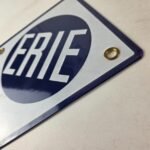
This sign passes all standard porcelain enamel authentication checks. For those unfamiliar with the process, the key indicators of an original versus a reproduction are described in full in our Authentication Guide. In summary: the sign’s weight (heavy-gauge steel), edge enamel wrap (original enamel covers the back edge), mounting hole wear (consistent with decades of hardware use), and enamel surface character (deep glassy sheen with period-consistent aging) all confirm this is an original porcelain enamel piece, not a reproduction tin or screen-printed copy.
Display Recommendations
Erie Railroad signs display most powerfully in transportation-themed environments — railroad rooms, home offices, man caves, and garage spaces where the historical context reinforces the piece’s visual impact. Their bold typography and high-contrast enamel graphics create strong visual presence even at moderate distances.
Pair with complementary pieces from our vintage railroad signs collection or combine with vintage aviation signs and vintage travel signs for a complete American transportation history display. Use existing mounting holes only — drilling new holes permanently reduces collector value.
Explore Related Collections
More antique railroad porcelain signs · Vintage aviation signs · Gas & oil signs · Vintage travel signs · Collector Resources · Authentication Guide · Full shop